
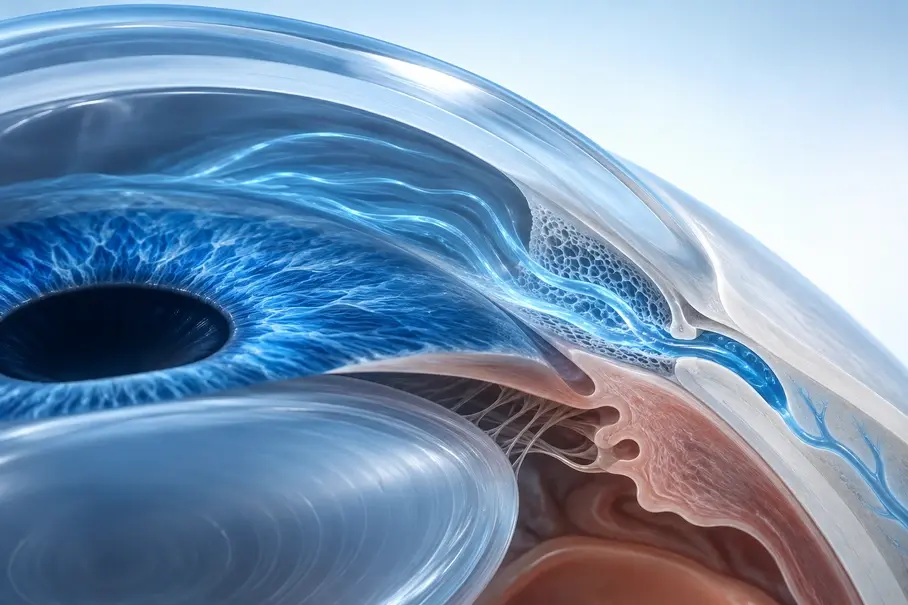
What is glaucoma?
Glaucoma is a group of conditions that damage the optic nerve, the cable that carries information from the eye to the brain, usually because of raised pressure inside the eye. The eye constantly makes a fluid that drains away to keep its pressure steady, but if the drainage becomes less efficient, the pressure rises and can gradually harm the delicate nerve fibres.
Most glaucoma develops slowly and painlessly, which is why it is sometimes called a silent condition. The most common type, open-angle glaucoma, affects side vision first, and because the change is so gradual, many people do not notice it until a significant amount has been lost. A less common but more urgent type, angle-closure glaucoma, can cause a sudden, painful rise in pressure that needs prompt treatment. Risk factors include increasing age, a family history of glaucoma, certain ethnic backgrounds, short-sightedness and diabetes. The key point is that sight already lost to glaucoma cannot be recovered, so early detection and steady treatment are what protect your vision. Regular monitoring of the eye pressure, the appearance of the optic nerve and your field of vision allows the condition to be caught early and managed before it causes noticeable harm.
What does glaucoma treatment involve?
Treatment aims to lower eye pressure and protect your vision using drops, laser or surgery, matched to your type and stage of glaucoma. Ms Brinda Shah, a specialist glaucoma surgeon in Yeovil, plans your care around your individual needs and monitors it carefully over time, adjusting the approach as needed.
For many people, treatment begins with prescription eye drops or a gentle laser procedure such as selective laser trabeculoplasty, both of which lower the pressure without surgery. If more is needed, minimally invasive glaucoma surgery can reduce pressure with a quicker recovery than traditional operations, and is often combined with cataract surgery. For more advanced or difficult glaucoma, established filtration surgery such as trabeculectomy can achieve a larger, lasting reduction in pressure. Ms Shah has particular expertise across this full range of options, including modern minimally invasive techniques, and she will explain clearly which approach suits your eyes. Monitoring is an essential part of treatment, using measurements of your pressure, scans of the optic nerve and tests of your side vision to make sure your glaucoma stays stable.
What to expect at your glaucoma appointment
- Detailed eye pressure, optic nerve and visual field checks
- A clear diagnosis and explanation of your options
- A personalised treatment plan
- Ongoing monitoring to protect your sight
What are the benefits and considerations of glaucoma treatment?
Timely treatment can slow or halt further sight loss and keep your glaucoma stable, allowing most people to maintain useful vision for the rest of their lives. Modern options mean that treatment can often be tailored to be as gentle as possible while still protecting your sight, and being cared for by a glaucoma specialist gives you access to the full range of approaches. According to NICE guidelines, regular follow-up is crucial in glaucoma management.
The most important thing to understand is that damage already done cannot be reversed, which is why early, consistent care matters so much. Treatment controls the condition rather than curing it, so ongoing monitoring and, in most cases, continued treatment are needed to keep the pressure safe. Drops can sometimes cause irritation or be difficult to remember, laser effects can lessen over time, and surgery carries its own risks, all of which your consultant will discuss openly so you can choose the right path. With regular review and a plan suited to your eyes, the outlook for most people with glaucoma is good. Outcomes cannot be guaranteed, but the goal of protecting your remaining vision is one that consistent specialist care in Yeovil is well placed to achieve.

Ms Brinda Shah
Consultant Ophthalmologist
Quick facts
Type
Chronic condition
First-line
Drops or laser
Options
Drops, laser, surgery
Care
Long-term monitoring