
What is MIGS?
minimally invasive glaucoma surgery uses tiny devices or techniques to improve the eye’s natural drainage and lower its pressure, with far less disruption than traditional glaucoma surgery. The aim is to achieve a meaningful reduction in pressure while keeping the procedure gentle and the recovery short.
MIGS covers a range of modern approaches, including micro-scale stents such as the iStent and the Hydrus, which are placed within the eye’s drainage system to help fluid flow away more easily. These devices are extremely small and work with the eye’s own anatomy rather than creating a large new drainage pathway, which is why the risks and recovery time are generally lower than with conventional surgery. MIGS is particularly well suited to mild and moderate glaucoma, and it is very commonly performed at the same time as cataract surgery, allowing two conditions to be treated in a single operation. It may not lower pressure as much as major surgery, so it is not the right choice for every case, but for the many people who fall into the suitable group, it offers an attractive option. Your consultant will explain whether your glaucoma and your eyes are well matched to this approach.
What MIGS involves
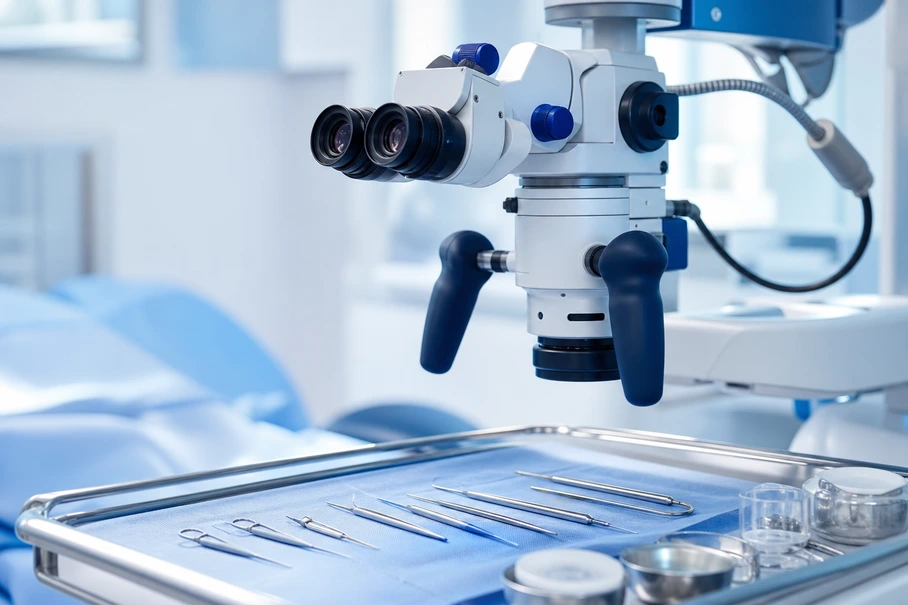
Ms Brinda Shah places a micro-device such as an iStent or Hydrus to help fluid drain, often at the same time as cataract surgery. The procedure is carried out in Yeovil, usually as a day case under local anaesthetic, so the eye is numbed and you stay comfortable throughout. When combined with cataract surgery, the glaucoma device is placed through the same tiny incision used to remove the cataract, so there is no additional wound.
The minimally invasive nature of the surgery means it is typically quick and gentle, and because the devices are so small, they are not felt once in place. Before your surgery, your consultant will have assessed your glaucoma carefully, including the pressure, the drainage angle and the health of the optic nerve, to confirm that MIGS is suitable and to plan the right device. Afterwards, you will use eye drops for a period while the eye settles, and you will be reviewed to check how well the pressure has responded. Recovery is usually faster than with traditional glaucoma surgery, and most people return to their normal routine quickly.
What to expect on the day of your MIGS procedure
- A pre-operative assessment of your eye
- Local anaesthetic, often alongside cataract surgery
- A short, minimally invasive procedure
- Same-day discharge with eye drops
MIGS benefits and considerations
MIGS can reduce eye pressure and your reliance on drops, with a faster recovery and a lower risk of complications than conventional glaucoma surgery. When performed alongside cataract surgery, it allows both problems to be addressed together, which is convenient and avoids a second operation. For many people with mild to moderate glaucoma, it provides a welcome middle ground between drops and major surgery.
There are considerations to keep in mind. MIGS suits milder glaucoma and may not lower the pressure as much as a larger operation, so it is not suitable for everyone, particularly those with advanced disease who need a bigger reduction. Some people still need drops afterwards, although often fewer, and the amount of pressure lowering varies between individuals. As with any procedure there are small risks, such as inflammation or a temporary change in pressure, which your consultant will explain fully before you decide. Ms Shah’s experience with these modern techniques means she can advise honestly whether MIGS fits your case, and outcomes are never guaranteed. If you would like to explore a gentler approach to your glaucoma, a consultation in Yeovil will help you understand your options.

Ms Brinda Shah
Consultant Ophthalmologist
Quick facts
Anaesthetic
Local
Devices
iStent / Hydrus
Stay
Day case
Recovery
Days